
Chad Patton, MD, MS
Board-certified, fellowship-trained spine surgeon serving Annapolis and the region
Twenty years of surgical experience. Fellowship-trained in comprehensive adult spine surgery. Medical Director of Spine Surgery at Luminis Health. Conservative care first, and minimally invasive, same-day surgery when you need it.
What are you feeling?
Spine conditions cause a range of symptoms. These are the most common reasons patients come to see a spine surgeon. Choose the one that sounds like you.
Neck pain radiating into the arm
Sharp or burning pain down the shoulder, arm or hand, often with numbness, tingling or hand weakness. Frequently worse with driving, sitting and sleeping.
Hand clumsiness, balance changes, or trouble walking
Numb fingers, difficulty buttoning shirts, unsteady walking, or legs that don't respond normally, sometimes without much pain.
Low back pain with leg pain, numbness or weakness
Pain that travels from the back into the buttock, thigh, calf or foot, usually worse with sitting or bending.
Leg pain or heaviness when walking
Pain, cramping or fatigue in one or both legs that gets worse with walking and eases with sitting or leaning forward.
Worsening posture or a visible curve
A forward-leaning stance, uneven shoulders or hips, or a curve noticed in adulthood, sometimes with back pain or less ability to stand for long.
Back pain after a minor fall or cough
In fragile, osteoporotic bone, a simple fall or even a hard coughing spell can collapse a vertebra and cause intense pain with activity.
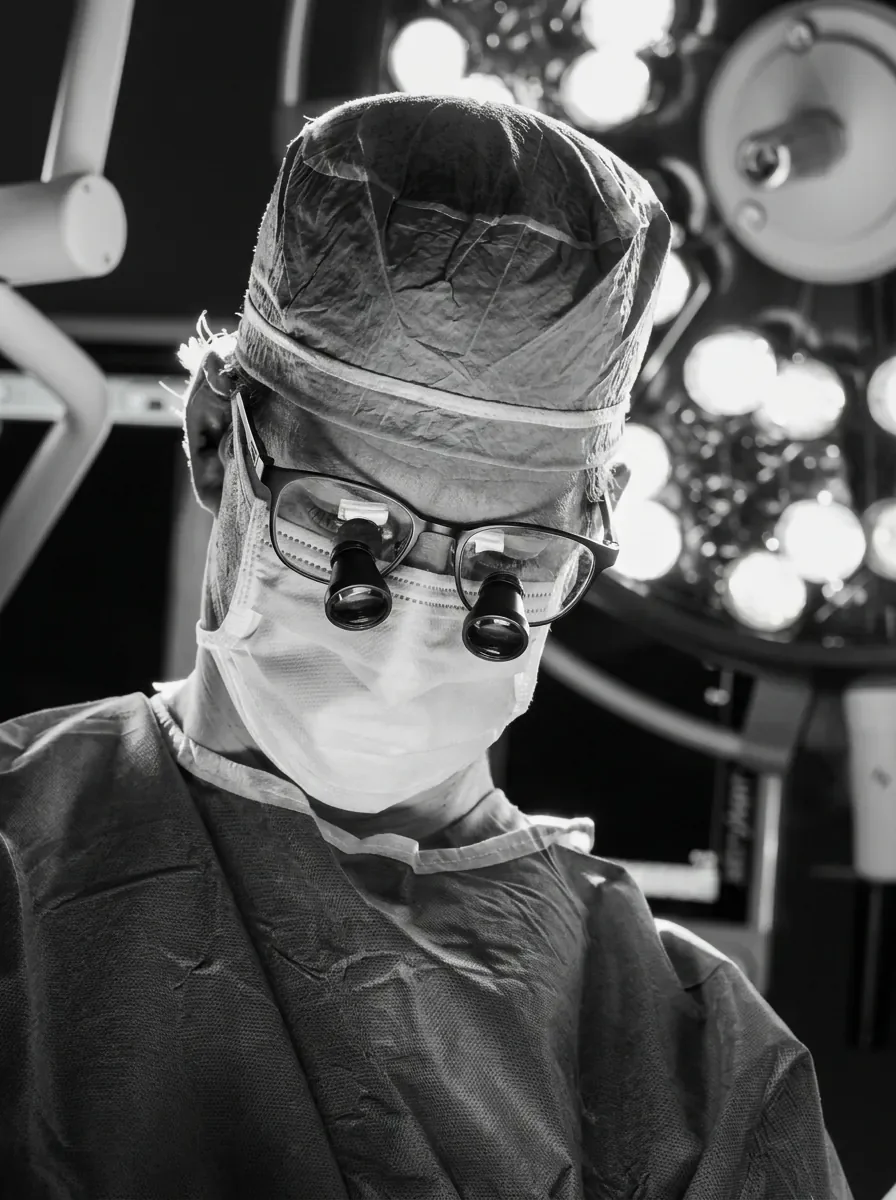
Why patients choose Dr. Patton
- Surgery only when it will help. Most back and neck pain gets better without an operation, and Dr. Patton will tell you if yours will too.
- Minimally invasive and outpatient when possible. He led Luminis Health's move of spine surgery to the ambulatory surgery center, so many patients sleep in their own bed that night.
- Measured outcomes. His patients complete PROMIS surveys before and after surgery, and he reports the results. See research and outcomes.
- Complex care under one roof. He treats routine to complex adult spine conditions, including deformity, tumors and revision surgery, with a multidisciplinary team of physiatry, pain management and physical therapy.
Surgical procedures
Dr. Patton performs procedures ranging from minimally invasive surgery to revision spinal reconstruction. Procedures marked ASC-eligible are commonly performed at an ambulatory surgery center with same-day discharge.
What patients say
Excerpts from public reviews on Healthgrades, quoted as written. Names are left out for privacy.
“He and his staff made the process as pain- and anxiety-free as anyone could have. He and his staff have top-notch skills in every aspect of the process… Much appreciated!”
“He explained everything that needed to be done, and what my recovery would look like. He has a very gentle and calming nature… All my pre-surgery pain is completely gone.”
“Never rushed. Takes time to explain what he can do for you… He gave me my ability to stand and walk again.”
“The pre-op procedures were excellent, as was the care and attention during the operation. Dr. Patton is an excellent surgeon and very easy to talk with about the procedures.”
“Explained everything that made it easy to understand.”
Surgery is a shared decision between you and your surgeon
Spine conditions and their treatment can be nuanced, and often there is no single right answer. If you've been told you need surgery, a second opinion can help you choose the treatment that best fits your goals.
- What to bring
- A recent MRI (within 12 months when possible), prior imaging reports, operative notes from any prior spine surgery or recent injections, and a list of treatments you've already tried, such as physical therapy, injections and medications.
- What to expect
- A focused review of your imaging and symptoms, and a discussion of your options, both surgical and non-surgical.
- When surgery isn't the answer
- Often surgery is not the answer and conservative care is the best option. For many patients, a clear "no surgery" answer is the most useful result of a second opinion.
- How to schedule
- Book online if you have an MRI from the past 12 months, or call (410) 268-8862.
Online scheduling (MRI required) → More about second opinions
Back pain is the second most common reason people see a healthcare provider
Before seeing a spine surgeon, see your primary care provider or a back pain physician called a physiatrist. Only 5–10% of patients with low back pain have a specific structural cause that surgery can treat.
- Surgery is for nerve pain
- Acute or chronic back pain without leg symptoms is rarely treated with surgery. Most back pain comes from muscle strain, age-related disc and joint changes, mild-to-moderate degenerative findings or disc bulges.
- Who treats what
- For isolated low back pain, a physiatrist or pain medicine specialist, not a spine surgeon, is usually the right place to start. Physiatrists are physical medicine and rehabilitation physicians who treat back pain with physical therapy, targeted injections, medication and the long-term follow-up most back pain patients need.
Offices in Annapolis and Pasadena
Serving Anne Arundel County and patients from across Maryland, Washington, DC, Northern Virginia, Delaware and the Eastern Shore.
Luminis Health Spine Surgery — Annapolis
2000 Medical ParkwayBelcher Pavilion, Suite 101
Annapolis, MD 21401
Luminis Health Spine Surgery — Pasadena
8109 Ritchie HighwaySuite 200
Pasadena, MD 21122
Common questions
Do I need a referral to see Dr. Patton?
Many insurance plans don't require one, but some do. Call (410) 268-8862 to check. You can also book online if you have an MRI from the past 12 months.
Do I need an MRI before my appointment?
Online scheduling requires a lumbar or cervical MRI from the past 12 months. If you don't have one, call the office and the team will help you take the right next step, which is often a visit with a physiatrist first.
Does Dr. Patton always recommend surgery?
No. Most neck and back problems get better without surgery, and a clear 'you don't need surgery' is often the most useful answer a patient gets. Surgery is mainly for nerve or spinal cord compression that hasn't improved or is causing weakness.
Can spine surgery be done as an outpatient?
Yes, often. Microdiscectomy, laminectomy, ACDF, cervical disc replacement, kyphoplasty and selected minimally invasive fusions are commonly done at an ambulatory surgery center with same-day discharge. See outpatient spine surgery.
Where does Dr. Patton see patients?
In Annapolis at 2000 Medical Parkway, Belcher Pavilion, Suite 101, and in Pasadena at 8109 Ritchie Highway, Suite 200. Surgery is performed at Luminis Health Anne Arundel Medical Center and at an affiliated ambulatory surgery center.
Do you offer second opinions?
Yes. Dr. Patton regularly sees patients who have been told they need spine surgery and want a second opinion. See what to bring.
Ready to talk about your options?
Call (410) 268-8862 or book online. Bring your most recent MRI — online scheduling requires one from the past 12 months.